
Greene County City Directory Holdings
The Springfield-Greene County Library District Local History collections are the main local route for historical resident research. Their holdings combine print reproductions, microfilm, digital volumes, telephone books, cross-reference volumes, newspapers, maps, census microfilm, and cemetery transcriptions. The important choice is not simply a title. It is choosing the format and year that fit the question.
| Collection | Years | Where held | Access |
|---|---|---|---|
| Escott history and directory | 1878 | Library historical collection | Online table of contents |
| Springfield directory reproductions | 1881-1900 | Library Local History | Local collection |
| Springfield directory run | 1901-1969 | Library Local History | Microfilm, with part online |
| Later Springfield directories | 1970-present | Library Local History | Closed storage |
| Telephone and cross-reference runs | 1916-2006 | Library Local History | Microfilm or closed storage |
These ranges describe holdings, not a promise that every issue is freely searchable on the web. When an online volume is absent, the library’s microfilm and closed-storage routes still matter. Library staff and the local-history collections are the practical next stop for an edition that is not in the digital run.
Greene County Directory Years at Local History
Local History holds Missouri census microfilm from 1830 through 1930 alongside the directory material. That pairing makes it possible to check a household in the years between federal census dates without treating the two sources as identical. A directory is dated commercial or civic reference material; a census is an enumerated historical record with its own timing and coverage.
Telephone books form a separate shelf. The library lists 1916-1960 on microfilm and later telephone years in closed storage. Cross-reference directories run from 1950-1970 on microfilm and 1971-2006 in closed storage. These distinct dates matter when an address is known but a normal alphabetical listing does not resolve the question.
- 1878: Escott’s history and directory records residence and occupation information for heads of families and people over 18.
- 1881-1900: Springfield directory reproductions extend the local library shelf.
- 1901-1920: Copyright-permitted Springfield PDFs form the digital collection.
- 1901-1969: The broader Springfield directory run is available on microfilm.
- 1970-present: Later directories are listed in closed storage.
Note: A missing digital issue is not evidence that a family left Greene County or that no printed volume exists.
The Library Local History digital archive also gathers maps, newspapers, obituaries, photographs, county records, and historical markers. Those collections help keep an address, spelling, and date in the right local context.
A source image from the Library Local History collections page shows the research categories available alongside directory material.
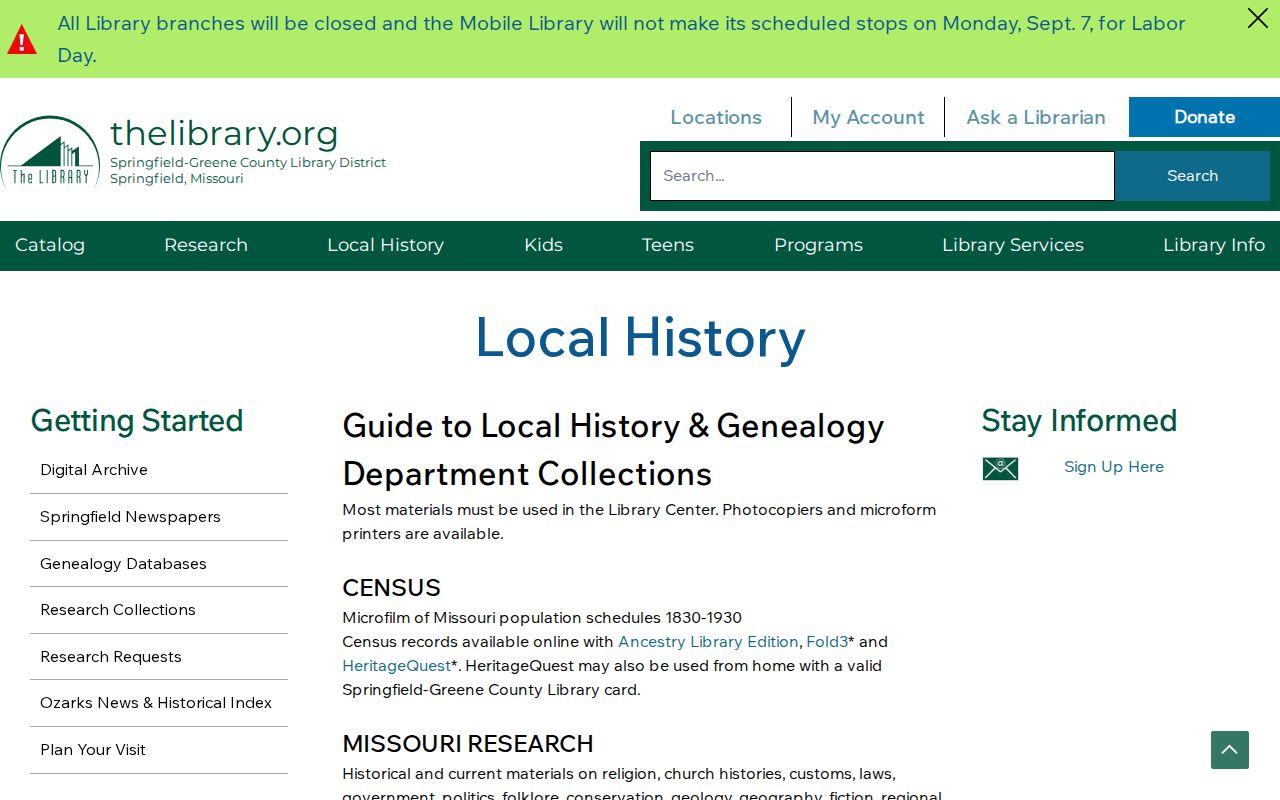
The collection categories are useful reminders to compare a directory finding with a dated newspaper, map, or record index when names repeat.
Greene County Digital Directory Volumes
The digital directory collection makes Springfield volumes from 1901-1920 available as large PDFs where copyright permits. These scans are especially useful when a reader has a surname, a street number, or both. Some volumes provide an alphabetical surname index and an alphabetical street or dwelling-number index, so the research can move from a person to an address or from an old address to a likely entry.
Use the volume’s date as part of every note. The directory records what its publisher included for that edition, not a timeless account of a household. Read the introductory material and any index pages before drawing conclusions from a single line.
A capture from the Library’s digital city-directory collection shows the online collection used for the 1901-1920 PDF run.
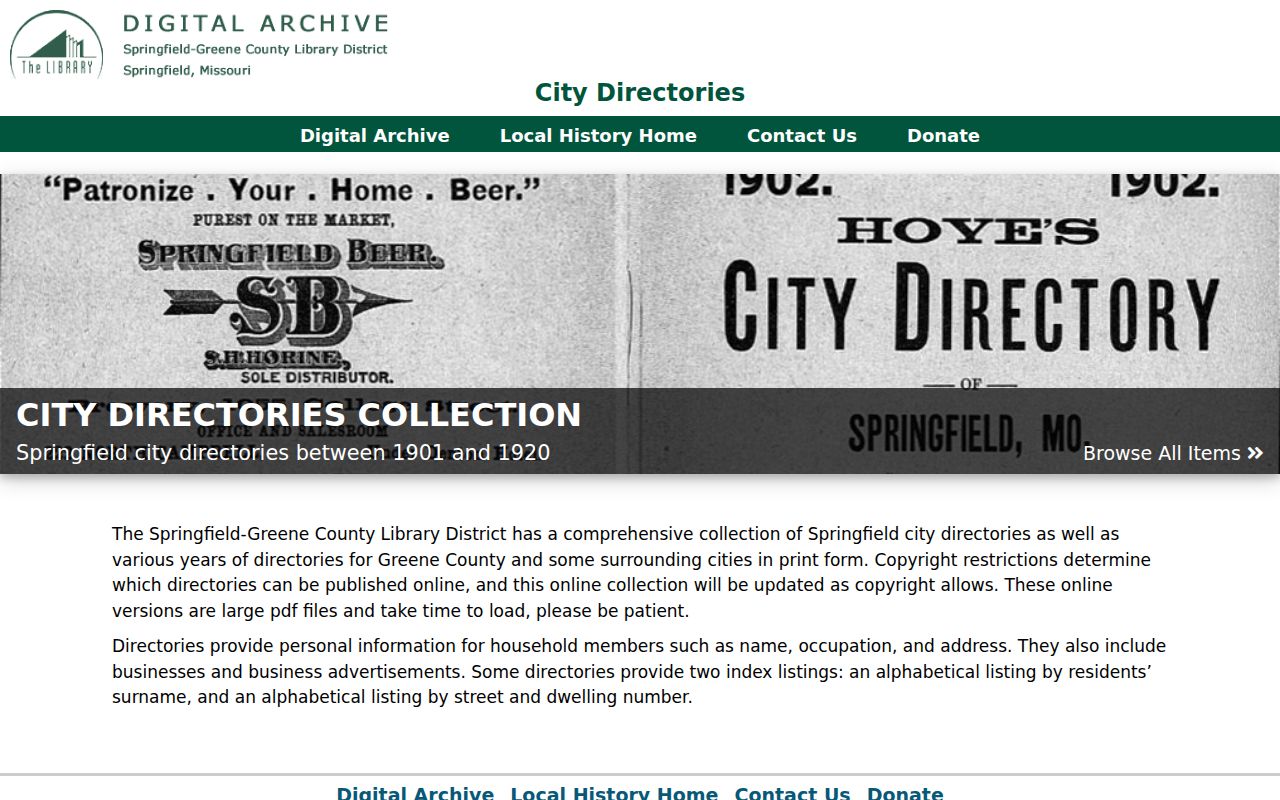
The online collection is a starting point, while the library’s other formats fill many of the dates before and after those PDFs.
Greene County Surname and Street Directory Indexes
When a digital volume supplies both index types, search the surname first if a person is known. Search the street or dwelling-number list first if the address is known. Record the exact spelling, initial, street form, and year. Then test that result against another year, a census schedule, map, obituary, deed, or probate file before joining two similar names.
The library’s Greene County records site provides other dated indexes, including probate, court, naturalization, coroner, divorce, and stray records. These are finding aids with different evidence value. They can connect a historical name to a book, date, or township, but they do not turn a directory line into a current resident record.
The Greene County records-index page illustrates the neighboring archival indexes that can corroborate a dated directory clue.
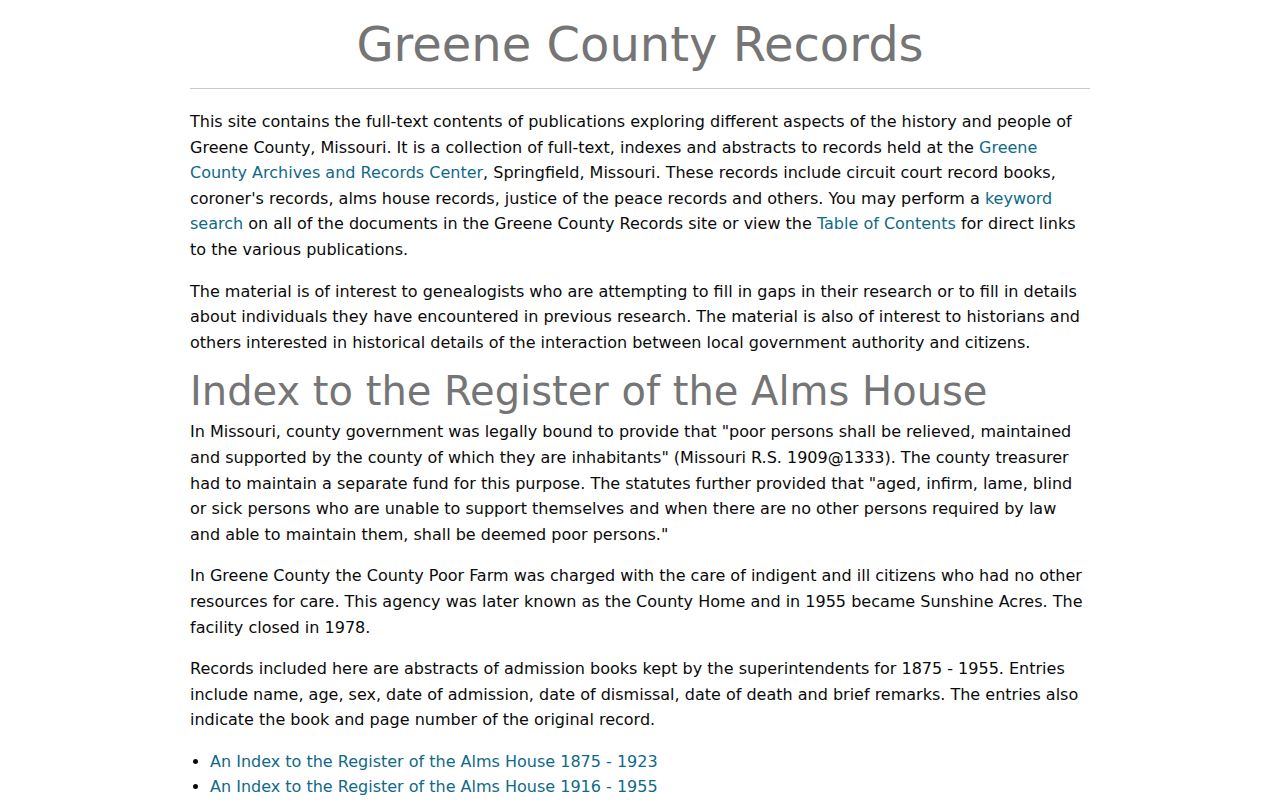
Each index should be read with its date span and original-record route in mind, especially when a name has common spelling variants.
Reading a Greene County Directory Entry
Entries need to be read as the volume presents them. The 1878 Escott work identifies heads of families and people over 18, along with residence and occupation. Later searchable volumes may offer surname and street or dwelling-number indexes. A useful transcription preserves the printed name, the edition year, the residence wording, and any occupation or numbering information rather than silently converting the entry to a modern format.
| Name | Copy the printed spelling, initials, and ordering before comparing similar names. |
|---|---|
| Residence | Record the address exactly as printed, including the period street form and number. |
| Occupation | The 1878 Escott directory includes occupation as a period descriptor. |
| Street or dwelling index | Where supplied, it offers an address-to-entry route for that particular volume. |
| Numbering explanation | Read the volume’s own explanation before trying to match an old number to a current map. |
- Cross-reference directory
- A directory arranged to connect an address or street reference back to a listed entry.
- Householder index
- An alphabetical name arrangement used to locate a household-style entry when a volume supplies one.
- Abbreviation key
- The volume’s explanation of shortened words, initials, or numbering conventions, which should be saved with the transcription.
Do not infer a present address, family relationship, or ownership from these historical fields. The value is the dated lead and the path it opens to an original or companion source.
Greene County Telephone and Cross-Reference Runs
Telephone books and cross-reference volumes expand the local shelf without replacing the regular directory. Telephone books cover 1916-1960 on microfilm, with later years held in closed storage. The cross-reference run covers 1950-1970 on microfilm and 1971-2006 in closed storage. These distinct dates matter when an address is known but a normal alphabetical listing does not resolve the question.
A cross-reference result should be treated as a lead for the publication year. Compare it with the standard volume, a map, or a census before assuming the listing identifies every person connected to that address. For a modern street-by-street property question, the Greene County by-street directory follows the current address-record route instead.
Greene County Directory Myth: Online Is the Whole Shelf
Only the 1901-1920 Springfield PDFs are identified as the digital run. The library also holds 1878, reproductions for 1881-1900, microfilm through 1969, and later material in closed storage. Searching only a web collection can therefore create a false gap between a historic household and the next available online edition.
Local History tip. Give the library the name, address, and approximate year, then ask which directory format covers that date.
The format is part of the research trail. An image, microfilm reel, reproduction, or stored volume may answer the same historical question through a different access route.
Greene County Directories and Obituary Checks
A disappearing entry can mean several things: a move, a death, a change in how the volume listed a household, or a simple omission. The Ozarks Obituary Collection contains more than 130,000 obituary notices from southwest Missouri newspapers, while Springfield obituaries are held through a separate Library District collection. Date, spelling, and community are essential when using either route.
Hall’s Index to Items of Genealogical Interest covers births, deaths, marriages, divorces, engagements, anniversaries, and related Springfield newspaper material from 1900-2009. Springfield newspapers are available online and on microfilm, and Greene County plus neighboring-county papers are on microfilm. This makes a good follow-up chain when a directory year supplies a last known address but no explanation for a change.
Trace a Greene County Household Through Directories
Household tracing works best as a dated sequence, not a single search. Begin with the nearest confirmed year, capture the entry faithfully, and move one edition at a time. Pairing directory years with census years helps separate a likely move from a name collision or a publication omission.
- Choose a confirmed name, approximate year, or historical address and locate the closest available volume.
- Record the printed name, residence, occupation, and edition year before searching another source.
- Check the surname or street and dwelling-number index when that edition provides one.
- Compare nearby editions, then pair the time period with the appropriate census microfilm.
- Use obituaries, newspapers, maps, probate, or deed records to test a move, death, or same-name possibility.
When the question becomes one about a current person rather than a dated household, use the official-record routes in the Greene County resident lookup and keep the historical evidence clearly labeled.
Greene County 1905 Directory and Map Context
Greene County Archives offers a 1905 Springfield directory and a 1908 Springfield map among its online projects. The map can help place a printed street name or public building in its own period. It should not be treated as a current boundary layer, because street patterns, names, and municipal geography change over time.
The library also identifies Sanborn fire-insurance maps for Springfield from 1933-1950 and 1957 print versions, along with plat books and USGS maps. These are strong context tools when a directory gives a street number but no parcel identifier. Preserve the map year and original place name in the research notes.
Greene County Archive Routes for Missing Years
The Archives and the Missouri State Archives provide a fallback when a library index or directory ends. The local repository holds probate, circuit court, coroner, county-clerk, collector, assessor, Recorder, and other series with different dates and access routes. The Missouri State Archives county inventory helps locate archival series and microfilm leads rather than individual people.
The Greene County Archives holdings page shows the record-series context that can support a directory finding.
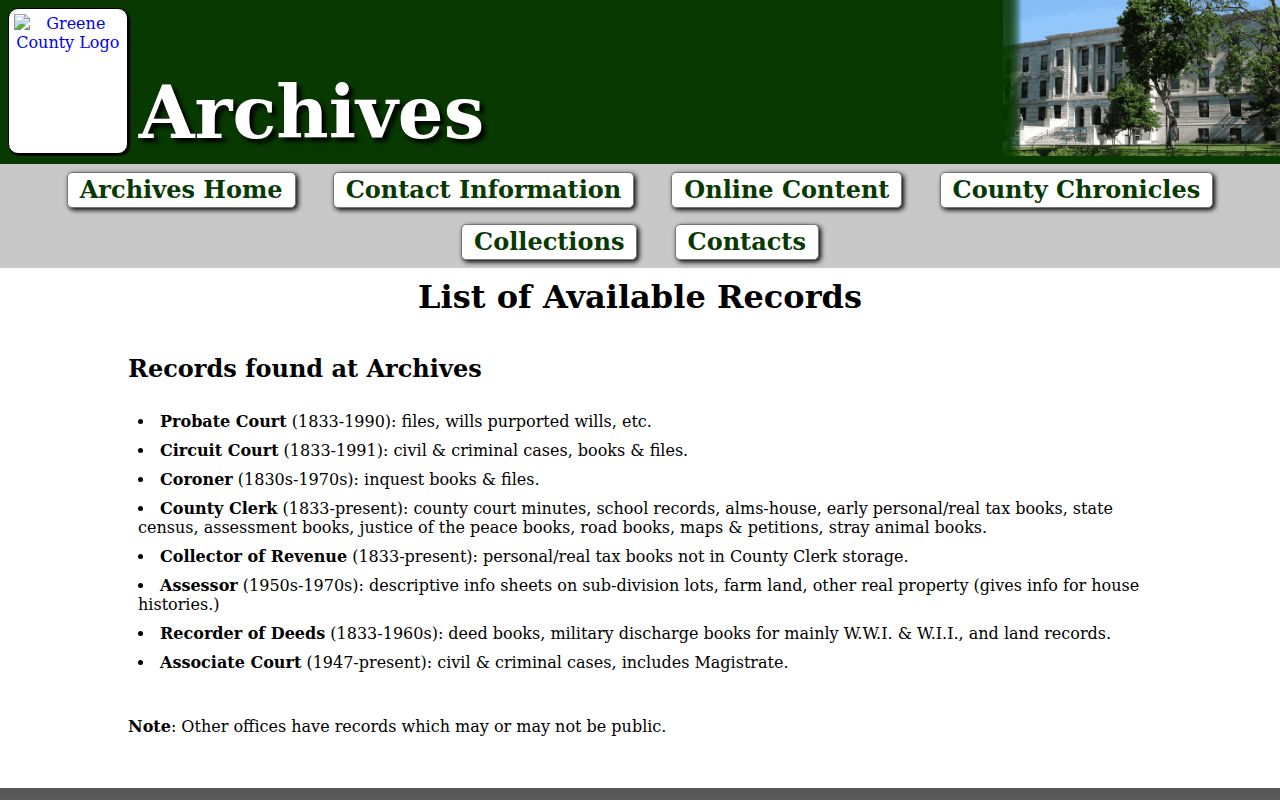
Move from an index to the original record when the distinction matters, and retain an “unresolved” result when the available sources do not establish the connection.